Maintenance That Finds Problems Before They Compound
HVAC tune up in Lawrence for equipment operating below rated efficiency or approaching its next major service interval
A neglected HVAC system does not fail all at once—it degrades in ways that are measurable long before the system stops working. Coil surfaces accumulate a layer of particulate that reduces heat transfer, blower assemblies collect debris that cuts airflow volume, and connections that were secure at installation work loose over operating cycles. RME Heating & AC, LLC performs HVAC tune ups in Lawrence, Kansas that evaluate exactly these conditions and address them before they require emergency service.
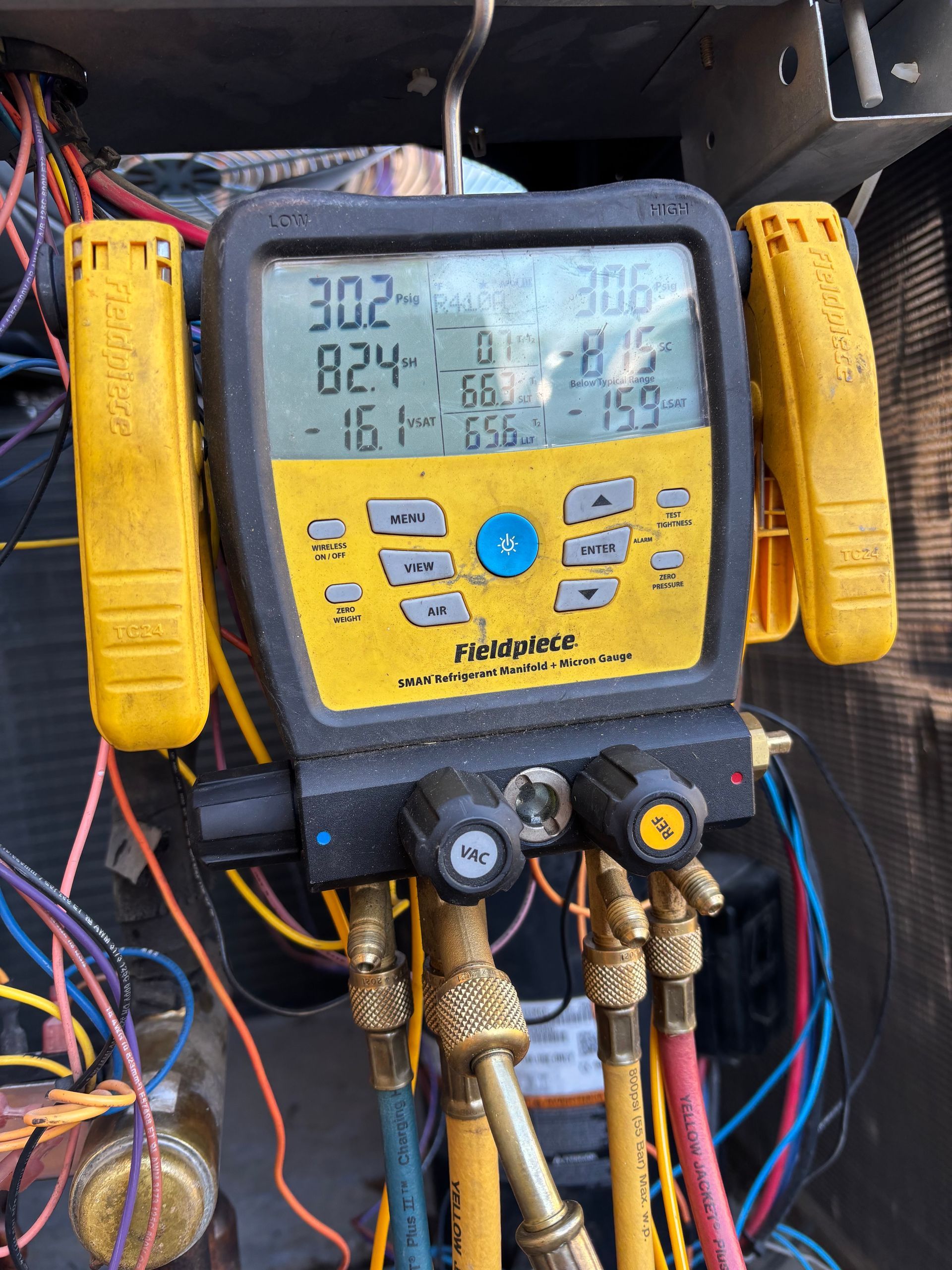
During the tune up, the technician inspects all major components, cleans coils and blower assemblies to restore the system to operating spec, and tests performance against the manufacturer's intended output. Any accumulated debris restricting airflow is removed, since even a moderate restriction forces the system to run longer cycles to move the same volume of conditioned air. The visit concludes with a documented evaluation of what was found, what was corrected, and what may need attention at a future interval. RME Heating & AC, LLC services all major HVAC brands, so the inspection follows the specific parameters for your equipment rather than a generic checklist.
Arrange an HVAC tune up with RME Heating & AC, LLC by calling (785) 764-8931 to set up a time that works with your schedule.
How a Tune Up Restores System Performance
Coil cleaning is often the highest-impact task in an HVAC tune up because dirty coil surfaces act as insulation rather than heat exchangers. On the cooling side, an evaporator coil coated in particulate cannot absorb heat from indoor air efficiently, which means the compressor runs longer to produce the same result. Cleaning restores the coil's contact area with the airstream and brings heat transfer back to designed capacity. The blower assembly receives the same attention, since impeller fins that are partially blocked by debris move less air per rotation than they were sized to handle.
Once the tune up is complete, the system reaches set temperature in fewer operating minutes and holds it more consistently between cycles. Homeowners with units that have gone two or more seasons without service often notice the difference in run time within the first billing period. What looks like a minor efficiency improvement on paper translates to less mechanical stress across every operating cycle, which is what extends equipment service life in practice.
The tune up also establishes a baseline record of component condition at that point in the equipment's life. That record is useful for tracking wear over time and for making informed decisions about repair versus replacement as the system ages—decisions that should be based on documented condition rather than estimated age alone.
What Property Owners Ask About the Tune Up Process
These questions address what actually happens during an HVAC tune up and how the condition of the system or property affects what the visit involves. They are about the work itself, not the business.
What components are inspected during an HVAC tune up?
The technician inspects evaporator and condenser coils, the blower assembly, electrical connections, the thermostat, and overall system performance under a live operating cycle. Components showing wear or accumulation are cleaned or flagged depending on the severity.
How does coil condition affect the rest of the system?
A coil with surface buildup transfers heat less efficiently, which causes the compressor to run longer cycles to compensate. Extended compressor run time is one of the most common upstream causes of premature compressor failure in residential HVAC systems.
What should you do to prepare before a technician arrives for a tune up?
Clear the area around the indoor air handler and outdoor condenser unit so the technician has direct access to both. If the system has a filter that has not been changed recently, make a note of when it was last replaced so the technician can factor that into the airflow evaluation.
Why do HVAC systems in older Lawrence homes sometimes need more extensive cleaning during a first tune up?
Homes built in earlier decades often have ductwork configurations that create more air resistance than modern designs, which means blower assemblies work harder and accumulate debris at a faster rate. A first tune up on a system that has not been recently serviced may require more time to restore clean airflow paths.
How can you tell whether a tune up actually improved system performance?
Run time per heating or cooling cycle is the most direct indicator—a properly cleaned and tested system reaches set temperature faster than one with restricted airflow or calibration drift. Comparing utility consumption in the weeks after the visit against the same period in prior years provides a longer-term baseline.
RME Heating & AC, LLC also provides HVAC tune ups in Lecompton, Baldwin City, Eudora, and Ottawa. To schedule a visit for your property, call (785) 764-8931 and a technician will confirm what to expect based on your system's make, model, and service history.