Cooling Restored When Your System Falls Short
AC repair in Lawrence for air conditioners running continuously without lowering indoor temperatures
A unit that runs without cooling is one of the more frustrating HVAC failures because the system appears to be working—the outdoor condenser is spinning, the blower is moving air—but the indoor temperature climbs anyway. That pattern points to a specific category of failures, most commonly low refrigerant from a leak, a blocked condenser coil that cannot release heat to the outside air, or a failing compressor that can no longer build adequate pressure in the refrigerant circuit. RME Heating & AC, LLC diagnoses the actual cause before recommending any repair, which matters because treating a symptom rather than the source leaves the underlying problem in place.
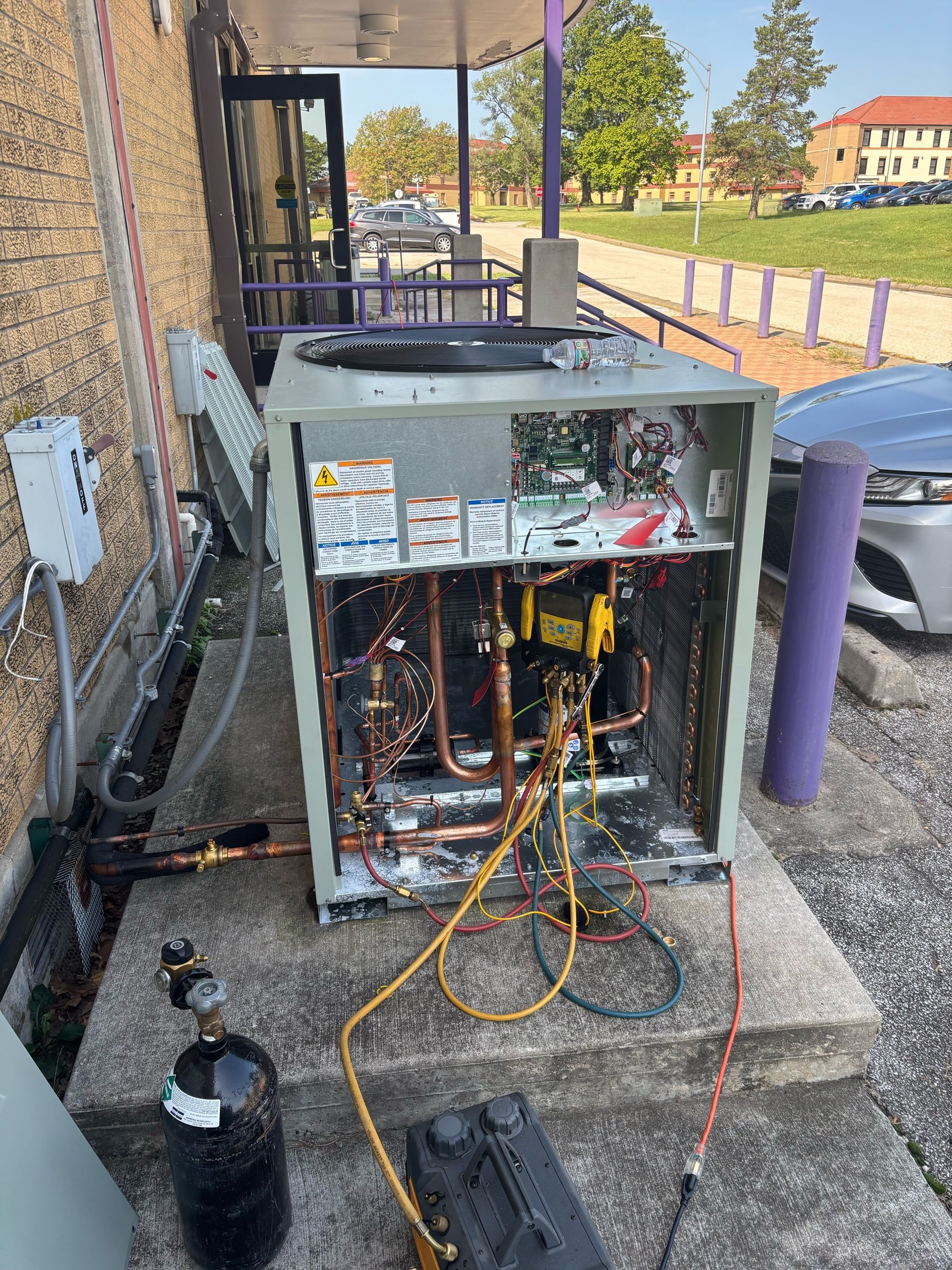
The diagnostic starts with a complete system evaluation: refrigerant pressure readings at both high and low sides, electrical testing of the compressor and capacitors, inspection of the condenser coil for debris accumulation, and a check of airflow across the evaporator coil. If refrigerant is low, the leak is located and sealed before the system is recharged to manufacturer specifications—adding refrigerant without addressing the leak is a temporary fix that fails again within the same season. Blocked condenser coils are cleaned to restore heat rejection capacity, clogged air filters are replaced, and all electrical components are tested before the system runs through a full performance evaluation.
Schedule a diagnostic evaluation to identify what is preventing your system from delivering cool air, and get a clear recommendation on whether repair or replacement makes more sense for your equipment's current condition.
How the Repair Process Addresses the Root Cause
Refrigerant leaks are among the most common AC repair situations, and they follow a predictable pattern: the system gradually loses capacity over weeks or months, the unit runs longer cycles to compensate, and eventually the indoor temperature cannot reach the thermostat setpoint regardless of how long the system operates. Locating the leak requires pressure testing and, in some cases, UV dye or electronic leak detection—not simply adding refrigerant and observing whether pressure holds. Once the leak is sealed and the system is recharged to the correct level, the refrigeration cycle can transfer heat at its designed rate again.
After the repair is completed, the observable changes are specific: the air coming from your registers will be noticeably colder, the system will reach the thermostat setpoint and cycle off rather than running continuously, and your indoor humidity will drop because the evaporator coil is now cold enough to condense moisture from the air as designed. RME Heating & AC, LLC runs the system through a full performance evaluation before finishing to confirm that all of these indicators are present, not just that the identified component was addressed.
Some repairs also involve the thermostat itself. A malfunctioning thermostat can misread indoor temperature, causing the system to short-cycle or run past the setpoint. Testing thermostat accuracy is part of the diagnostic, and in cases where the control signal is inconsistent, replacing the thermostat resolves behavior that looks like a refrigerant or mechanical problem but originates in the control system.
What Property Owners Ask About AC Repair
These questions focus on the repair process—what the diagnostic involves, what decisions get made, and how you can verify the work addressed the right problem.
Why is my air conditioner running constantly but not cooling the house?
Continuous operation without cooling typically indicates either low refrigerant pressure from a leak, a condenser coil so blocked with debris that heat cannot escape outdoors, or a compressor that is no longer building adequate pressure. Each cause requires a different repair, which is why a diagnostic pressure and electrical evaluation comes before any part replacement.
How do technicians locate a refrigerant leak rather than just recharging the system?
Leak detection involves pressure testing with nitrogen, UV dye introduced into the refrigerant circuit and inspected with a UV light, or electronic refrigerant detection equipment that identifies escaping gas at its source. Finding and sealing the leak is the only repair that prevents the same failure from recurring.
What happens to a condenser coil that causes reduced cooling?
The condenser coil releases heat captured from your home into the outside air, and when its fins are blocked by debris, the refrigerant cannot cool down enough to complete the refrigeration cycle efficiently. Cleaning the coil with appropriate coil cleaner and rinsing it restores heat rejection capacity without damaging the fins.
How does a failing capacitor affect AC performance?
Capacitors start and run the compressor and fan motors, and when they weaken, motors draw excess current, run hot, or fail to start under load. Testing capacitor microfarad values against rated specifications identifies a weak capacitor before it causes a complete motor failure.
What does a full performance evaluation after repair actually check?
The evaluation confirms that refrigerant pressure at both the high and low sides falls within the manufacturer's specified range, that air temperature at the supply registers matches expected output for the ambient conditions, and that the system cycles on and off correctly at the thermostat setpoint rather than running continuously or short-cycling.
RME Heating & AC, LLC also performs AC repair in Baldwin City, Eudora, Lecompton, and Ottawa. To arrange a diagnostic evaluation for your system, call (785) 764-8931.