
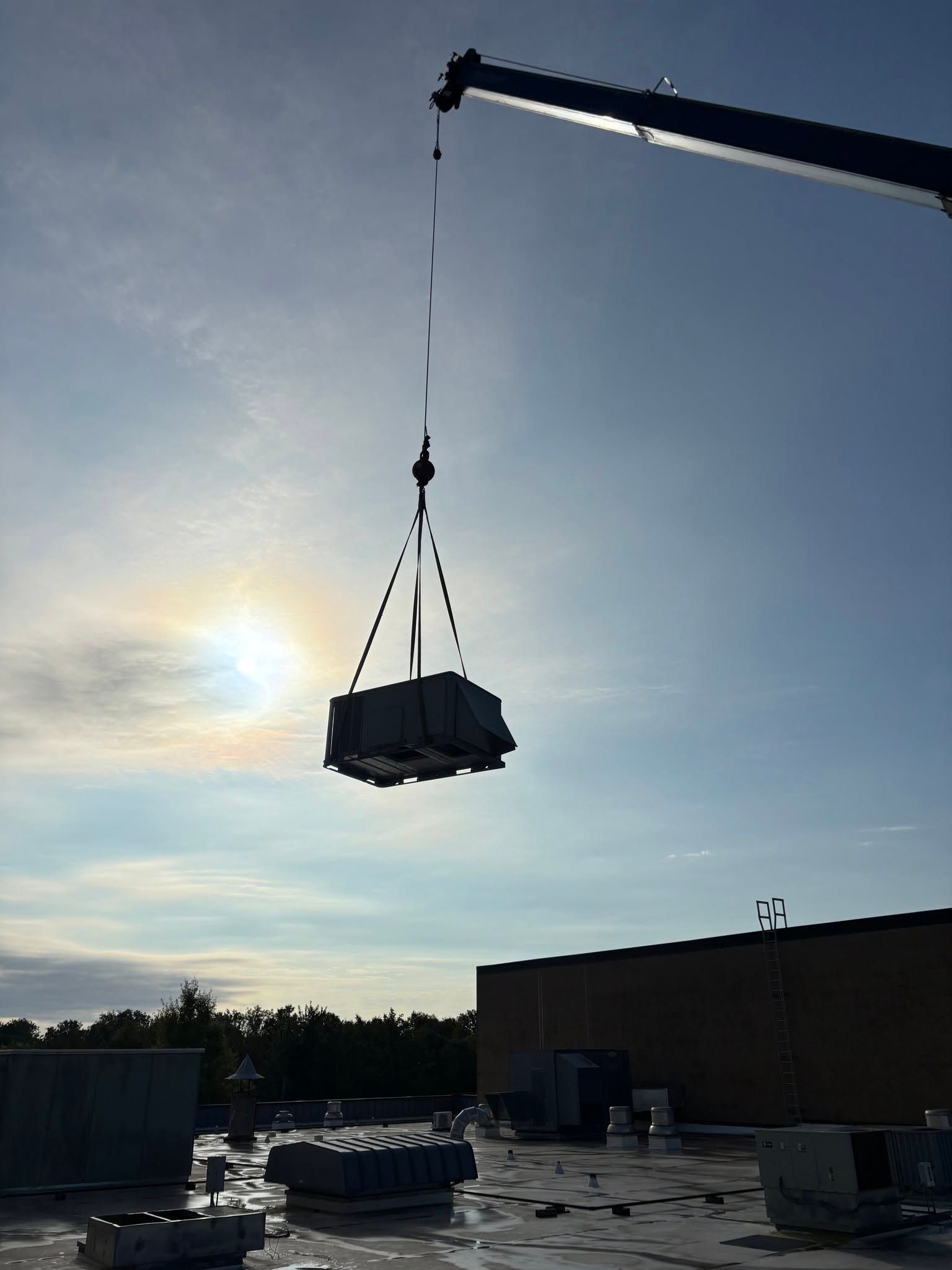
Sized Right the First Time, Every Time
AC installation in Lawrence for homes where incorrect system sizing drives up costs and underperforms on the hottest days
RME Heating & AC, LLC handles AC installation in Lawrence, and the work begins before a single component is ordered. Every installation starts with a complete load calculation—a measurement of your home's actual cooling demand based on square footage, ceiling height, insulation condition, window placement, and internal heat sources. That calculation determines which system size fits your home, and getting it wrong in either direction creates problems: an undersized unit never catches up on peak days, while an oversized unit short-cycles, leaving humidity unchecked and wearing out components faster than normal.
Lawrence homes vary considerably in age and construction. Older properties in East Lawrence often have less insulation and different duct configurations than newer builds, which means the load calculation must account for actual field conditions rather than square footage alone. Once the correct system is selected, installation covers the indoor evaporator coil, the outdoor condenser unit, refrigerant lines, and the blower assembly—all positioned and connected according to manufacturer specifications. Refrigerant is charged to exact levels, all ductwork connections are sealed to prevent efficiency loss, and the system is run through a full performance test before the job is considered complete.
Arrange an on-site load calculation to confirm which cooling capacity your home actually requires before selecting equipment.
What a Complete AC Installation Actually Covers
After the load calculation confirms system size, installation sequences through several dependent steps that each affect final performance. The evaporator coil is mounted in the air handler or furnace cabinet, the condenser unit is positioned outside on a stable pad, and refrigerant lines connect the two. Every ductwork joint at the air handler is sealed with mastic or metallic tape—not standard duct tape—because unsealed connections bleed conditioned air into unconditioned spaces, reducing delivered cooling by a measurable percentage. RME Heating & AC, LLC services all major HVAC brands, which means the connection and charging procedures follow the actual specifications for whatever equipment your home requires rather than a generic approach.
Once the system is running, you will notice consistent airflow from every register, stable indoor temperatures without the unit short-cycling on and off, and a thermostat readout that actually matches what the room feels like. These are the indicators that sizing was accurate and installation was completed correctly. A system that runs long, steady cycles rather than frequent short ones is moving the right volume of air and removing humidity along with heat.
The installation also includes thermostat connection and verification that the control signal correctly starts and stops the outdoor condenser. If your home has an older thermostat that is not compatible with modern variable-speed equipment, that incompatibility is identified during installation rather than discovered afterward when the system behaves unpredictably.
Questions About How AC Installation Works
The following questions address the installation process itself—what happens on site, what decisions get made, and what you can check once the work is finished.
What is a load calculation and why does it come before equipment selection?
A load calculation measures your home's heat gain using factors including floor area, insulation R-value, window area, and orientation, producing a cooling capacity figure in BTUs. Selecting equipment before this step risks installing a system that is too large or too small for your actual conditions, both of which reduce comfort and shorten equipment life.
How are refrigerant lines handled during installation?
Refrigerant lines are sized to match the equipment, insulated along their run to prevent heat gain, and connected to both the indoor coil and outdoor condenser before the system is evacuated and charged to the manufacturer's specified pressure. Charging to exact levels rather than approximating is what determines whether the refrigeration cycle runs at rated efficiency.
What happens to ductwork connections during an AC installation?
Every connection at the air handler is sealed using appropriate materials to eliminate conditioned air loss into wall cavities or attic spaces. In older Lawrence homes where original ductwork may have unsealed joints, this step can noticeably improve how evenly cooling reaches every room.
How do you know when the installation is complete and correct?
The system is run through a full operational test that confirms it reaches the thermostat setpoint, maintains stable airflow across all registers, cycles at the expected intervals, and holds refrigerant pressure within specification. The outdoor condenser, indoor coil temperatures, and blower speed are all verified before the technician leaves.
Why does blower assembly position affect cooling performance?
The blower moves air across the evaporator coil, and if it is misaligned, undersized for the duct system, or spinning at the wrong speed, airflow across the coil drops below the design threshold. That reduces the amount of heat transferred out of your home per cycle, making the system work harder to reach the same setpoint.
RME Heating & AC, LLC also installs air conditioning systems in Baldwin City, Eudora, Lecompton, and Ottawa. To confirm system sizing and schedule your installation, call (785) 764-8931 and speak directly with the team handling your project.