
Heating Systems Matched to Your Home's Actual Demand
Heating installation in Lawrence for homes where incorrect furnace or heat pump sizing leaves rooms cold and energy bills high
Correct sizing is the decision that determines how well a heating system performs for its entire service life, and it cannot be made accurately without a load calculation. Measuring your home's heat loss—accounting for insulation, window area, ceiling height, duct layout, and infiltration—produces the BTU capacity that your furnace or heat pump actually needs to deliver. A system installed without this step, sized by square footage alone or matched to whatever unit was there before, will either short-cycle because it generates more heat than the rooms can absorb or run continuously without reaching the setpoint because it was undersized for the actual load. RME Heating & AC, LLC begins every heating installation in Lawrence with this evaluation before recommending any equipment.
Downtown Lawrence and East Lawrence include a notable concentration of older construction—properties built in periods when insulation standards were lower and duct systems were designed for different equipment configurations. These homes require field measurement rather than assumptions, because the gap between what a building looks like on paper and what it actually loses in heat can be significant. Once the correct system is identified, installation covers indoor and outdoor component positioning, refrigerant line runs for heat pump systems, electrical connections, ductwork joint sealing, and a full load test to confirm the unit reaches set temperature and distributes heat evenly before the job is complete.
Set up a load calculation consultation to determine which heating system configuration matches your home's actual heating demand before selecting equipment.
What Proper Heating Installation Requires at Each Stage
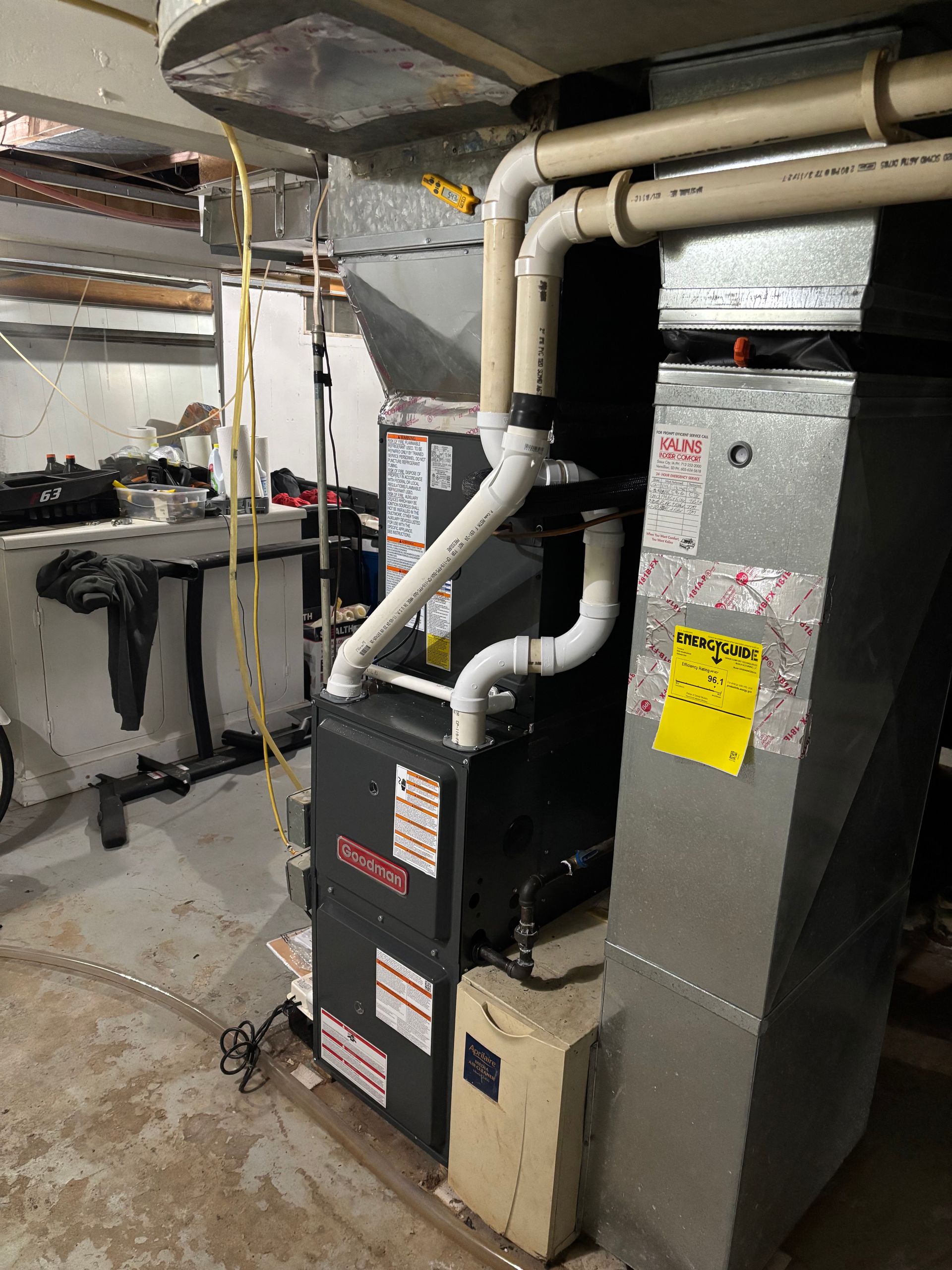
Installation sequences through stages that each affect the next. The heating unit—whether a gas furnace or a heat pump—is positioned to manufacturer clearance specifications before connections are made, because improper placement affects both combustion air supply for furnaces and refrigerant line geometry for heat pumps. Ductwork joints at the air handler are sealed with mastic rather than standard duct tape, which degrades over time and allows conditioned air to escape into unconditioned spaces. RME Heating & AC, LLC installs across all major HVAC brands, which means the refrigerant charging procedure and electrical connections follow equipment-specific specifications rather than a generic process.
After installation is finished, the system is run under load to verify it reaches the thermostat setpoint within a reasonable runtime, that heat distribution across all registers is even, and that the unit cycles correctly without excessive on-off frequency. A furnace that short-cycles has generated its target heat too quickly, which usually points to oversizing. A furnace that runs continuously without reaching setpoint was undersized or has an installation issue such as a restricted duct. Both conditions are identifiable during the post-installation test and should be resolved before the technician leaves.
For homes where the choice between a gas furnace and a heat pump is not yet settled, the load calculation results and the home's existing infrastructure—gas line availability, electrical panel capacity, duct sizing—inform that decision with specific data rather than general preference. Each system type has operational characteristics that suit different homes differently, and the right choice depends on those field conditions rather than a default recommendation.
Common Questions About How Heating Installation Works
These questions address the installation process, the decisions that determine equipment selection, and what the completed system should do when everything is installed correctly.
What does a heating load calculation measure and why does it precede equipment selection?
A heating load calculation determines the rate at which your home loses heat in BTUs per hour under design conditions, accounting for insulation levels, window area, ceiling height, and air infiltration. Selecting a furnace or heat pump before this step means sizing to assumptions rather than measured data, and an incorrectly sized system underperforms regardless of brand or quality.
How are ductwork connections sealed during heating installation and why does it matter?
Ductwork joints at the air handler and major transitions are sealed with mastic compound, which bonds permanently to sheet metal surfaces and does not degrade under the temperature cycling that standard duct tape cannot withstand. Unsealed joints allow heated air to escape into wall cavities or attic spaces, reducing the proportion of generated heat that actually reaches your rooms.
What is involved in the post-installation test for a furnace or heat pump?
The system runs through a complete heating cycle while airflow at each register is checked, supply air temperature is measured against design specifications, and the thermostat is verified to cycle the unit on and off correctly at the setpoint. For heat pumps, refrigerant pressure at both the high and low sides is confirmed to fall within the manufacturer's specified range for the ambient conditions.
How do older Lawrence homes affect heating installation decisions?
Properties built before modern insulation standards were adopted—common in East Lawrence and Downtown Lawrence—often have higher heat loss rates than their square footage suggests, which means a load calculation based on current conditions will produce a different equipment recommendation than a calculation based on the size of the home alone. Duct configuration in these homes may also require modification to match the airflow requirements of modern equipment.
Why does short-cycling after installation indicate an oversized heating system?
Short-cycling occurs when the furnace or heat pump generates its target heat output so quickly that the thermostat calls for only brief run periods, leaving the system stopping and starting repeatedly. This prevents proper heat distribution to distant rooms, causes accelerated wear on ignition and control components, and reduces efficiency by spending a disproportionate share of each cycle on startup rather than steady-state operation.
RME Heating & AC, LLC also installs heating systems in Baldwin City, Eudora, Lecompton, and Ottawa. To begin with a load calculation and equipment recommendation specific to your home, call (785) 764-8931.